Have questions? We're here.
| Trip Name | From | Days | Summary |
|---|---|---|---|
| Eastern Islands | $5,600 | 8 | Visit the Galapagos Islands aboard Tip Top IV during this 8-day cruise, where you'll enjoy the snorkeling in South Plaza, a panga ride in Turtle Cove, the Hill at Pitt Point and excursions on Chinese Hat, Sullivan Bay, and Santa Fe. |
| Western Islands | $5,600 | 8 | Set sail on an 8-day Galapagos Islands cruise aboard a first-class yacht. Cruise through Santa Cruz, Isabela, Fernandina, and Floreana to explore volcanic landscapes, mangroves, and wildlife habitats. Encounter giant tortoises, penguins, and marine iguanas while enjoying guided hikes, snorkeling, kayaking, and panga rides. |
| Northeast Islands I | $5,295 | 8 | Visit several islands thought the archipelago and experience the wildlife and landscape of the northeast on this 8-day cruise aboard the Archipel I. Spend your days exploring surreal landscapes, kayaking and snorkeling in clear waters, and hiking volcanic formations. |
| Northern Islands | $2,395 | 4 | This itinerary allows your to experience the best of the northern islands in only 4 days. During this trip indulge yourself in the beauty of this unique archipelago, relax on a white coral sand beach, do some exploratory snorkeling, and walk over volcanic landscapes. |
| Central Islands | $4,150 | 5 | This 5-day voyage on the Treasure of the Galapagos explores the central islands of the Galapagos, including Santa Cruz, Bartolome, North Seymour, Mosquera, South Plaza, and San Cristobal. Experience the picturesque landscape, unique wildlife, and snorkeling opportunities offered by this exciting Galapagos tour. |
| Southern Islands | $4,150 | 5 | This 5-day Southern Galapagos Islands cruise on the Treasure of the Galapagos yacht explores the islands of Santa Cruz, San Cristobal, Santa Fe and more. |
| Western Islands | $6,195 | 7 | This 7-day Western Islands cruise on the ship, Treasure of the Galapagos, explores Rabida, Santa Cruz, Fernadina, and more! Experience the fascinating western islands and understand how volcanic activity and isolation shaped the landscape. Encounter diverse wildlife, birdlife, and marinelife on your memorable vacation. |
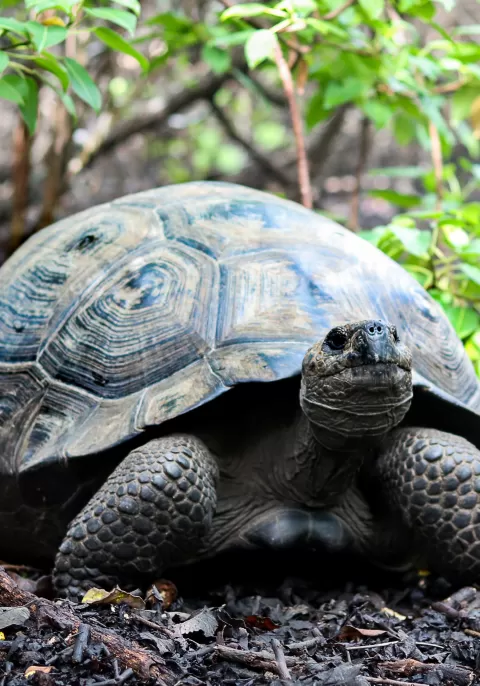
| Galapagos Central Islands | $2,527 | 4 | Discover the Galapagos' North Central islands on this four-day cruise and pay a visit to the Fausto Llerena Breeding Center, which is home to the Galapagos giant tortoise and was once home to the renowned Lonesome George. Stroll through pathways flanked by indigenous land iguanas, mockingbirds, Darwin's finches, or snorkel in clear waters. |
Why trust your once-in-a-lifetime trip to a generalist travel agency or a Galapagos cruise line who will only sell you their boats?
We take the time to understand your needs and match you with one of over 50 different yachts, each of them pre-screened by our team.
Since 1999, we have sent thousands of intrepid travelers on an Galapagos Island cruise.
Our very own Erin Correia is a T+L Top Travel Advisor for several years running. She leads our team of experts who help with booking Galapagos Island cruise trips. As a member of the board of directors of the International Galapagos Tour Operators Association, Erin and our team have a deep knowledge and commitment to the Galapagos unmatched anywhere on the planet.
Trust Adventure Life to make your Galapagos cruise extraordinary, with the support and expertise that only experts a personal touch can provide.
With space for 36 and 20 guests, the Coral I and Coral II offer an intimate Galapagos cruise experience across two sister yachts. Passengers enjoy warm, yacht-style design, panoramic lounges, open-air jacuzzis, and relaxed social spaces ideal for a personalized Galapagos island cruise adventure.
Max Passengers: 36
Ship Type: Motor Yacht
Operated By: KleinTours
Coral I
Coral II


EcoGalaxy is a sustainable catamaran designed for eco-minded travelers seeking responsible Galapagos cruises. With energy-efficient systems, solar technology, and space for only 16 guests, it delivers comfort, guided exploration, and environmentally conscious travel throughout a memorable Galapagos Island cruise.
Max Passengers: 16
Ship Type: Motor Yacht
Operated By: Galagents
Ship Specifications:
Horizon is a luxury catamaran offering smooth sailing, refined service, and modern amenities for high-end Galapagos cruises. Enjoy al fresco dining, a stylish lounge, and a solarium with jacuzzi. It’s ideal for travelers wanting a premium, comfortable Galapagos cruise experience.
Max Passengers: 16
Ship Type: Luxury Expedition Ship
Operated By: Royal Galapagos
Ship Specifications:


By submitting your email address, you are agreeing to opt in to marketing communications. We hold your information private and do not share it with third parties.

Galapagos cruise prices vary based on ship class and itinerary length, with luxury-class vessels being the most expensive. There are many mid-range options available for those looking for a balance of comfort and value. Contact us to match you with your ideal Galapagos Island cruise price based on your preferences.
Additional fees: Before boarding your Galapagos flight in Quito or Guayaquil, a $20 US fee must be paid to obtain a Transit Control Card in order to be allowed to travel to the National Park. The second entry requirement is the National Park Fee. Park authorities will collect this fee of $200 US upon arrival to the islands. Remember this fee must be paid in cash. No visitor is exempt.
The category of the boat and duration of the Galapagos Island cruise are the two most important factors. Galapagos cruise prices increase nearly proportionally to the number of days.
That said, most travelers find that:
Staying at a hotel on one of the inhabited islands for a few days before or after your Galapagos cruise is a way to lower the cost per day.


Our team is waiting and ready to talk with you about your next adventure. So go ahead and book an appointment with one of our specialized trip planners.
Let's ChatA Galapagos Islands cruise offers a truly unparalleled travel experience, distinct from any other destination on Earth. This unique archipelago is a sanctuary for rare and exceptional wildlife, complemented by pristine beaches and crystal-clear waters. Notably, the Galapagos National Park, encompassing 97% of the land and surrounding waters, forms one of the world's largest marine reserves, adding to its extraordinary appeal.
The Galapagos Islands can be visited year-round, as their privileged location on the equator results in an ideal climate for vacationing or embarking on a cruise. You can plan your Galapagos Island cruise for either the wet and warm season (December to May) or during the dry and cold season (June to November).
There are a lot of Galapagos Island cruises that can sometimes be challenging to select which ship and itinerary would be best for you. You can choose from 4 to 15-day long cruises on small yachts, catamarans or larger ships. There are also luxury class cruises that offer the best guides, cuisine and onboard comfort available. To get more insights about Galapagos tours, contact our Trip Planners if you have any questions.
Even the largest ships in the Galapagos hold only up to 100 passengers, while small yachts carry 16-20 travelers for a more intimate experience. Larger ships and catamarans offer added stability, medical services, and multiple guides, while smaller boats provide closer social dynamics but may rock more in choppy waters. Both options deliver exceptional wildlife viewing, helping you find the best Galapagos cruise for your travel style.
All tours and cruises to the Galapagos Islands start and/or finish at Santa Cruz Island (at neighboring Baltra Island Airport, GPS ) or San Cristobal Island airport. Cruise itineraries are frequently categorized as central, north, south, east, and west or by combining multiple regions.
Central Islands: Santa Cruz , Baltra, Santiago, Chinese Hat, Rabida, Bartolome, Santa Fe, South Plazas, North Seymour, Mosquera, and Daphne Islands.
Eastern Islands: San Cristobal
Southern Islands: Española, and Floreana.
Western Islands: Isabela and Fernandina.
Northern Islands: Genovesa, and the northernmost Wolf & Darwin Islands, which are only visited during dedicated diving trips
The Galapagos are governed by Ecuador, and 90-day tourist visas can typically be obtained at the airport in Quito or Guayaquil from the following countries, although we recommend you check with your local consulate to confirm the current status: United States, United Kingdom, Switzerland, South Africa, New Zealand, Netherlands, Ireland, Germany, Belgium, Canada, Australia. If your country is not on this list, you should check with your country's embassy for more detailed travel requirements.
Since there are no international flights coming into Galapagos, you will first need to fly to mainland Ecuador. Flights originate in the country's capital of Quito, and stop in the city of Guayaquil before heading to airports on Baltra or San Cristobal Islands. The reason why there are no direct international flights is because the archipelago is a protected National Park, so there are strict regulations that airlines must fulfill.
At the Airport: Before your Galapagos flight from Quito or Guayaquil, be prepared for additional procedures to comply with Galapagos National Park regulations. You'll need to obtain a Transit Control Card at the airport for $20 (often included with agency bookings) before checking your luggage. National Park authorities will then inspect luggage to prevent the introduction of prohibited items. Contact our Trip Planners for detailed information on these requirements.
On the Plane: Just before landing in the Galapagos, the crew will spray storage areas and the cabin floor with a non-toxic solution to prevent foreign elements from entering the islands.
Important: Keep your Transit Control Card with your travel documents, as it will be required by authorities at the Galapagos Airport before your return flight to the mainland.
You definitely should! We highly recommend buying travel insurance before heading out on your vacation, and we work with RedPoint Travel Protection to provide you with the best deals. They offer fair prices for comprehensive insurance packages. Our Once You’re Booked page has more info.
A Galapagos Islands cruise offers a unique opportunity to extend your South American adventure, combining natural and cultural wonders. Consider pairing your island experience with the Ecuadorian or Peruvian Amazon for an immersive rainforest exploration, or journey to Peru's Machu Picchu to witness the Incan empire's architectural marvels. Alternatively, explore the Ecuadorian Andes, from Quito's colonial charm to the volcanic landscapes of Cotopaxi and the historic city of Cuenca, for a breathtaking perspective on this majestic mountain range.
We bring cruise and land together into a single, well-orchestrated experience—so your trip feels cohesive, not pieced together.
You'll work with a team of humans who get to know you, answer every question, and support you until you return home—we're always just a call or text away.
Our extensive travel experience helps you avoid common pitfalls, maximize your time, and get the most out of every part of your trip.









No cost, no commitment. Talk with our experts about your dream trip.
Share your travel style—we match you with the right itinerary or create one just for you.
Lock in knowing every detail is handled and you’re fully supported.
Enjoy a seamless journey—and unlock 5% off your next adventure.